If your state licenses social workers at the bachelor’s level, the ASWB Bachelors examination is the test standing between your BSW and your license. It is a standardized exam administered by the Association of Social Work Boards (ASWB) and used by licensing boards across the United States and Canada.
The good news: most first-time candidates pass. In 2025, 70.4% of first-time test-takers passed the Bachelors exam, according to ASWB’s summary report of 2,741 exams administered. The less-good news: the exam costs $230 per attempt, so walking in unprepared is an expensive way to practice.
This guide covers who needs the exam, what it costs, how it’s structured, and how to prepare — without the test-prep marketing fog.
Who Actually Needs the Bachelors Exam?
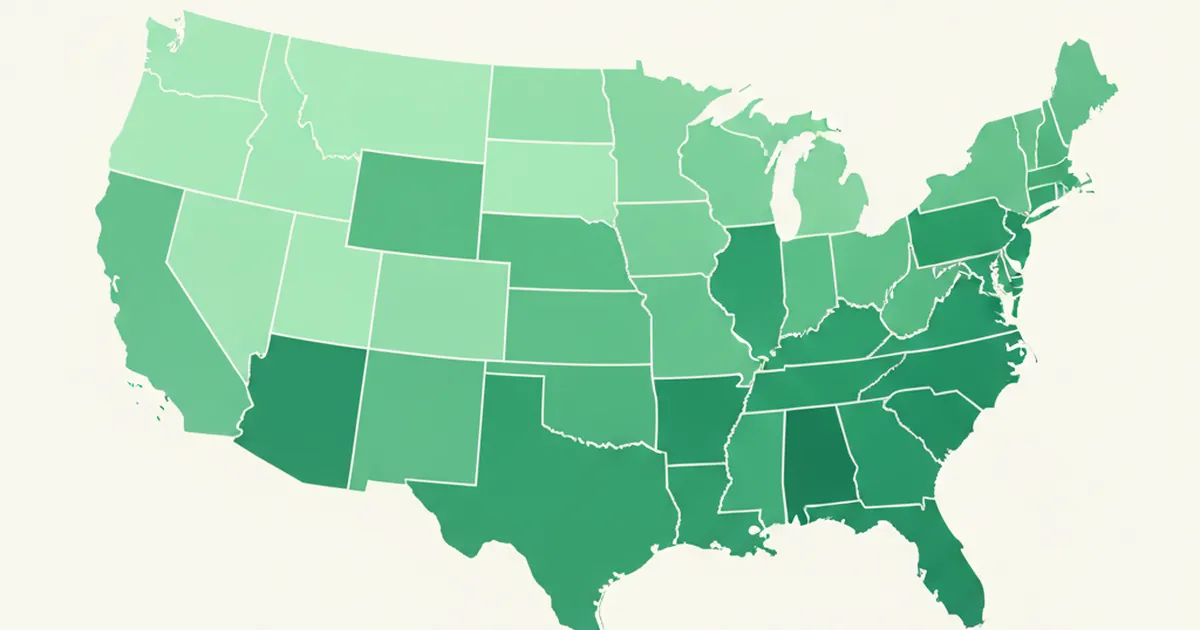
Not every BSW graduate takes this exam, because not every state licenses social workers at the bachelor’s level. States like Texas, Ohio, and Iowa offer an LBSW (Licensed Baccalaureate Social Worker) credential that requires the Bachelors exam. Others — California and Florida among them — only license at the master’s level, so BSW graduates there typically practice in non-licensed roles or continue to an MSW.
Before you spend anything, confirm two things with your state board:
- Does your state license at the bachelor’s level at all? Our licensure-by-state guide summarizes which credential each state offers, and each of our state program pages shows the BSW-level license available there.
- Do you apply to the board before registering for the exam? In most jurisdictions, you must apply for licensure with your state board — and be approved to test — before ASWB will let you register.
What the Exam Costs and How Registration Works
The Bachelors examination fee is $230, paid to ASWB at registration. That does not include your state’s licensure application fee, which is separate and varies by state.
The sequence in most states looks like this:
- Apply for licensure with your state social work board (state fee applies).
- Receive board approval to test.
- Register and pay ASWB’s $230 exam fee.
- Schedule your test appointment at a Pearson VUE testing center.
- Take the exam; results are available at the test center immediately for most candidates.
If you fail, you can retest — but you pay the full fee again, and most boards enforce a 90-day waiting period between attempts. Details on scheduling, identification requirements, and testing accommodations are in the official ASWB Examination Guidebook.
Exam Format: 170 Questions, Four Hours
The Bachelors exam is a four-hour, computer-based test with 170 multiple-choice questions. Only 150 of them count toward your score — the other 20 are unscored pretest items being evaluated for future exams, and you won’t know which is which.
There is no fixed universal passing score. ASWB uses a scaled scoring system where the number of correct answers required varies slightly by exam form; in practice, candidates generally need to answer roughly 93 to 107 of the 150 scored questions correctly. You either pass or you don’t — licensing boards don’t see or care about your margin.
Content follows the ASWB Bachelors exam blueprint, which is organized into four broad areas:
- Human development, diversity, and behavior in the environment — theories, life-span development, diversity and discrimination
- Assessment — gathering and interpreting client information, risk indicators
- Interventions with clients and client systems — planning, casework methods, documentation
- Professional relationships, values, and ethics — the NASW Code of Ethics, boundaries, confidentiality
If those areas sound like your BSW curriculum, that’s the point: the exam tests generalist practice at the level your CSWE-accredited program taught.
How Hard Is It, Really?
A 70.4% first-time pass rate means roughly 3 in 10 first-time candidates fail. For comparison, ASWB’s 2025 first-time rates were 73.9% for the Masters exam and 75.7% for the Clinical exam.
Two honest observations about those numbers:
- Retake pass rates are much lower than first-attempt rates. Candidates who fail once tend to struggle on later attempts, which is a strong argument for over-preparing on attempt one rather than treating it as a scouting trip at $230 per try.
- Pass rates vary meaningfully across demographic groups and programs. ASWB publishes pass-rate reports by state and by social work program, and the disparities in those reports have driven an ongoing professional debate about the exam. If exam outcomes matter to your choice of program, the program-level reports are public — you can look up how graduates of a specific school perform.
A Realistic Preparation Plan
You do not need a $500 prep course to pass a generalist exam with a 70% first-time pass rate. You need structured review and enough practice questions to learn how ASWB frames scenarios. A sensible eight-week plan:
- Weeks 1–2: Review the exam blueprint and take one full-length practice test cold to find your weak content areas. ASWB sells an official practice exam built from retired questions — it is the only practice material drawn from the real item bank.
- Weeks 3–6: Targeted content review, weighted toward your weakest blueprint area. For most candidates that’s ethics application questions — not knowing the NASW Code, but applying it to “what should the social worker do FIRST” scenarios.
- Weeks 7–8: Timed practice blocks. Train the test skill ASWB actually measures: picking the best answer among several defensible ones, at a pace of about 85 seconds per question.
One practical note from the format: with 170 questions in 240 minutes, time pressure is real but not brutal. Flag hard questions, move on, and come back — an unanswered question is a guaranteed miss.
After You Pass
Passing the exam doesn’t make you licensed — your state board issues the license after receiving your score, verifying your degree, and completing any remaining requirements (background checks, jurisprudence exams, supervision registration in some states). Processing times vary from days to weeks by state.
If you’re still choosing where to study, exam eligibility starts with an accredited degree: browse BSW programs by state or our college rankings to compare programs on completion rates and cost. And if your long-term plan is clinical practice, remember the Bachelors exam is only the first rung — the BSW-to-MSW pathway leads to the Masters and Clinical exams later.
Sources
- Association of Social Work Boards — “Exam pass rates” — 2025 summary report for first-time test-takers — https://www.aswb.org/exam/exam-scoring/exam-pass-rates/
- Association of Social Work Boards — “ASWB Examination Guidebook” — 2025 — https://www.aswb.org/wp-content/uploads/2025/02/2025-ASWB-Examination-Guidebook-Pearson-VUE.pdf
- Association of Social Work Boards — “Exam performance reports for social work schools and programs” — https://www.aswb.org/exam/contributing-to-the-conversation/exam-performance-reports-for-social-work-schools-and-programs/
- Association of Social Work Boards — “Exam Registration” — https://examregistration.aswb.org/